
When Your Business Has Goals but No Clear Direction
- Janice George-Pinard

- Jan 16
- 3 min read

Like many businesses, I’m sure you have goals.
Revenue targets.Growth plans.Marketing objectives.Personal milestones.
On paper, everything looks ambitious and forward-moving. Yet in reality, progress feels slower than it should. Effort is high. Energy is stretched. And despite ticking off goals, something still feels off.
That’s often the sign of a deeper issue:
Your business has goals, but no clear direction.
What This Really Means
Goals focus on what you want to achieve.Direction focuses on where you’re going.
When direction is unclear, goals exist in isolation. They may be well-intentioned, but they don’t always connect to a coherent future.
How do you know?
Your teams work hard but feel scattered
Initiatives multiply without clear priorities
Decisions are debated repeatedly
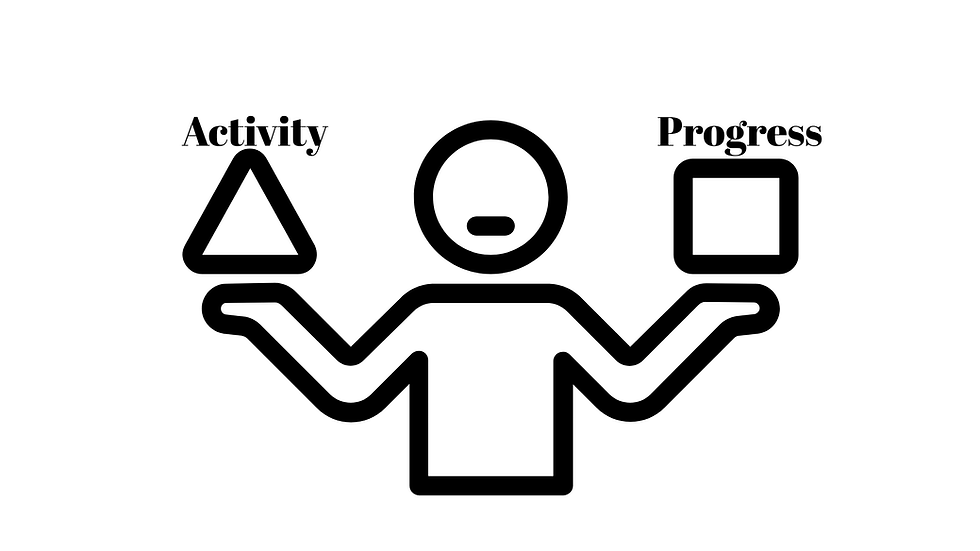
Progress feels busy rather than meaningful
Success feels short-lived or hollow
The business is moving, but not intentionally.
Transformation begins to slow down because activity replaces alignment.
Why Goals Alone Are Not Enough
Goals are useful, but they are not strategic anchors.
Without direction:
Goals compete with each other
Short-term wins override long-term health
You react instead of leading
Resources are spread thin
Focus drifts
You may hit some goals and still feel like the business isn’t becoming what you hoped it would be.
How This Impacts Business Transformation
Transformation requires more than momentum. It requires meaning.
When you attempt to transform the business without a clear direction, efforts feel fragmented:
Systems are upgraded without clarity on purpose
Strategies are introduced but quickly abandoned
People struggle to see how their work fits the bigger picture
Resistance quietly grows because the “why” is missing
Without direction, transformation becomes exhausting instead of empowering.
What Clear Direction Provides
Clear direction acts as a stabilising force during change.
It:
Aligns your goals into a coherent journey
Helps you and other leaders prioritise what matters now
Filters out distractions that don’t serve the future
Gives teams confidence and clarity
Anchors decisions during uncertainty
It’s important to note that direction doesn’t eliminate challenges. However, it will give them context.
How to Recognise If Direction Is Missing
You may have a direction problem if:
You struggle to articulate where the business is heading in simple terms
Goals change frequently without explanation
Strategy feels reactive rather than intentional
Teams are unsure what “success” really looks like
You’re achieving outcomes without a sense of progress
These are not failures. They are signals. Signals that something needs to be done.
What To Do When Goals Exist Without Direction
Transformation begins by stepping back, not pushing harder.
Start by asking better questions:
What kind of business are we intentionally building?
What do we want to be known for in the future?
What impact do we want to make beyond performance metrics?
What must change for that future to be possible?
Direction emerges from clarity, not urgency.
Once direction is defined:
Goals can be realigned
Strategy gains focus
Effort becomes intentional
Changes start to connect
Direction Before Acceleration
One of the most common mistakes in transformation is accelerating before aligning.
When something isn’t working, the instinct is often to do more:more goals,more initiatives,more meetings,more pressure on people to perform.
Without alignment, momentum becomes exhausting, and over time, speed without direction creates burnout, frustration, and strategic drift.
True transformation looks different. It slows down long enough to ask better questions.It clarifies purpose before setting priorities. It ensures strategy, structure, and daily decisions are pulling in the same direction.
Why? Because transformation isn’t about moving fast. It’s about moving faithfully, intentionally, and sustainably.
If your business is full of goals but lacking clarity, the solution isn’t ‘more effort’. It’s alignment.
Transformation doesn’t begin with doing more. It starts with understanding where you’re going and why.
When direction is clear, goals will no longer be pulling the business in different directions. They will work together toward a future that is intentional, meaningful, and sustainable, and that’s when transformation becomes possible.
This article forms part of the Business Transformation Series — a thought-leadership collection designed to help business leaders step back, realign, and intentionally transform their businesses for sustainable growth.
The series focuses on the foundations that make transformation stick:clear vision, strategic focus, aligned structures, strong leadership capacity, and the skills required to lead change with confidence. Each article is designed to support leaders who sense that their business needs to evolve, not through more effort, but through greater clarity and alignment.
Janice George-Pinard is a Certified Business Coach, Consultant and transformation strategist with experience supporting business leaders through seasons of change. Her work centres on helping leaders turn vision into reality by aligning purpose, strategy, structure, and people. Janice is the author of The Ten Commandments of Crisis Management and works with both values-driven and faith-led business owners who want to build resilient, impactful businesses grounded in strong principles.
For Janice’s full bio or to explore consultancy, coaching and transformation support, visit


Comments