
The Difference Between Activity and Strategic Progress
- Janice George-Pinard

- Apr 11
- 6 min read
Strategy, Focus & Strategic Choices — Choosing Well
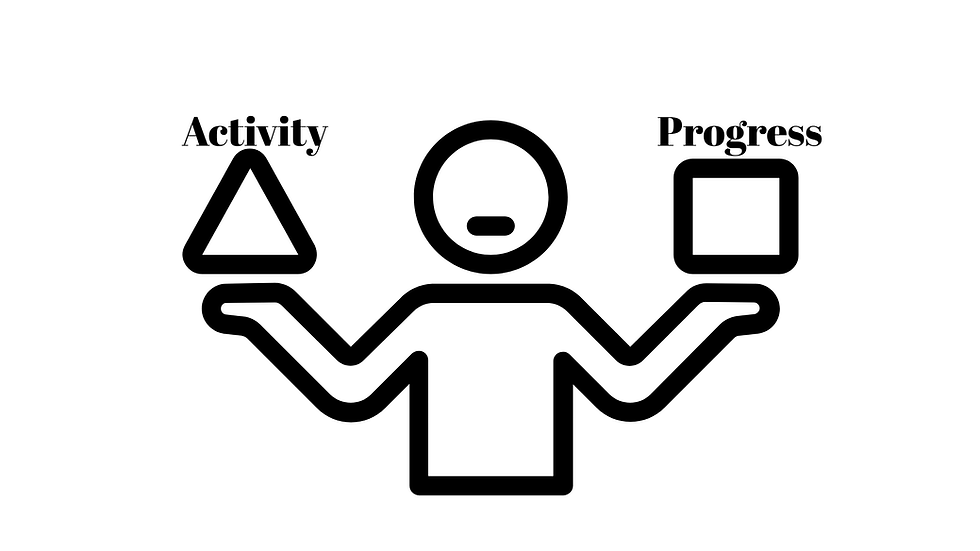
One of the easiest traps to fall into in business is confusing activity with progress.
A full calendar can feel productive.
A busy team can look effective.
A long to-do list can create the impression that the business is moving forward.
But the truth is….. not all movement is meaningful.
And not all activity is strategic.
This is one of the reasons some businesses feel constantly busy but still struggle to gain real traction. There is effort, movement, and momentum on the surface. Yet underneath, the business may still feel scattered, stretched, or slightly off-course.
Quite often, this is a sign that what’s happening is activity, not necessarily strategic progress.
If you are leading a transformation, knowing the difference matters deeply.
What Activity Looks Like
Activity is movement. It is the doing, the responding, the producing, and the keeping-things-going side of business.
It often shows up as:
meetings
emails
projects
content creation
launches
problem-solving
team conversations
admin
firefighting
task completion
None of these things is wrong. In fact, many of them are necessary. The issue is not the activity itself, but when the activity becomes the default measure of effectiveness.
A business can be very active and still not be moving in the right direction.
What Strategic Progress Looks Like
Strategic progress is different. It is movement with intention. That kind of progress actively moves the business closer to the future it is trying to build.
Strategic progress is not always louder or busier. In fact, it can sometimes look slower on the surface, but underneath, it creates clarity, alignment, and meaningful traction.
Here’s what it looks like:
clear priorities being advanced consistently
decisions being made in line with long-term direction
systems being strengthened to support growth
leaders focusing on what matters most
teams working with greater clarity and less confusion
fewer distractions and better execution
Activity fills time, but strategic progress builds something.
That is the difference.
Why We Confuse the Two
One reason activity and strategic progress are so easily confused is that activity is more visible. You can see it, track it and feel it. A packed day feels like effort. A busy team feels like momentum. Constant motion can create a sense of reassurance.
On the other hand, strategic progress often requires things that don’t always feel productive, such as:
stopping
reviewing
clarifying
simplifying
saying no
revisiting direction
strengthening what’s underneath
Because these things are quieter, they are often undervalued. Yet, they are often the very things that create sustainable progress.
A Real-Life Example
Imagine a business that is constantly launching new things — new offers, new campaigns, new ideas, new content and new initiatives. On the surface, it looks dynamic and productive.
But behind the scenes, the team is stretched, the messaging is unclear, delivery is inconsistent,
priorities keep shifting, and nothing has enough focus to mature properly. That is not necessarily strategic progress. That is often activity without alignment.
Now compare that to a business that chooses to focus on fewer priorities for a season. Instead of adding more, they simplify. They refine one core offer, strengthen delivery, improve internal systems, clarify their customer journey, train their team well and reduce noise. From the outside, it may look less dramatic, but underneath, the business is becoming stronger, clearer, and more scalable. That is strategic progress. It’s not always flashy, but it’s deeply effective.
Why This Matters in Business Transformation
Business transformation is not just about introducing change. Rather, it is the deliberate pursuit of the right changes, executed in the right manner…and that requires strategic movement.
One of the biggest risks in transformation is becoming so focused on making changes that you stop paying attention to whether the change is actually producing meaningful progress. That’s when transformation starts to feel exhausting. A lot is happening, but the results don’t follow.
You may find yourself updating processes, introducing new initiatives, engaging in discussions, and pursuing various improvements, yet without a sufficiently strong strategic thread to connect all of these efforts. As a result, transformation becomes fragmented rather than focused.
That is why it’s important to ask this question: “Is what we are doing moving us forward in the way that matters most?”
Signs You May Be Stuck in Activity Instead of Progress
Sometimes the difference becomes clearer when we look at the warning signs.
You may be experiencing a lot of activity but limited strategic progress if:
your team is always busy, but priorities are not clear
there is a lot of effort, but not enough traction
initiatives keep being added without enough being completed
decisions are made reactively rather than strategically
the business feels full, but not focused
progress is hard to measure beyond “we’ve been busy”
people are working hard, but the bigger picture still feels fuzzy
These are not signs of failure. They are signs that the business may need to pause, refocus, and realign.
What Strategic Progress Requires
Strategic progress does not happen by accident. It requires intentional leadership.
It asks leaders to do more than keep things moving. It asks them to ensure that movement is meaningful. That often means developing the discipline to:
choose fewer priorities
revisit the strategy regularly
filter distractions
align daily work with long-term direction
measure progress beyond busyness
This is where leadership maturity becomes so important, because when you’re under pressure, activity often feels easier than clarity. It is easier to keep doing than to stop and ask whether what you are doing still fits.
Strategic leaders know that motion alone is not enough.
How to Shift from Activity to Strategic Progress
If your business feels busy but not fully aligned, here are a few practical ways to shift.
1. Reconnect With the Bigger Picture
Ask yourself:
What are we actually trying to build?
What does progress really look like for us?
What matters most in this season?
If the destination isn’t clear, activity will always fill the gap. Strategic progress starts with clarity of direction.
2. Review What Is Actually Moving the Needle
Not every task contributes equally to progress. Take a step back and ask:
What are we doing that is genuinely moving the business forward?
What are we maintaining out of habit rather than purpose?
What feels productive but is not producing meaningful results?
This can be a confronting exercise, but it’s a very useful one.
3. Reduce Competing Priorities
One of the biggest enemies of strategic progress is too many simultaneous priorities. When everything is important, very little gets the focused attention it needs. Choose fewer things and do them better. That often creates more progress than trying to move everything at once.
4. Strengthen Strategic Review Rhythms
Progress is easier to maintain when you create space to review it regularly.
That might include:
weekly leadership reflection
monthly strategy reviews
quarterly priority resets
team check-ins focused on what matters most
Without review, activity can quietly take over again.
5. Measure More Than Output
Many businesses measure effort more easily than effectiveness. However, strategic progress requires better questions.
Not just: What did we do?
But also: What changed? What improved? What became clearer? What moved us closer to our vision?
Output matters. But alignment matters as well.
Progress Often Feels Less Dramatic Than Activity
This is one of the most important things to understand. Strategic progress often feels less dramatic than constant activity. The main reason is because it is not always noisy.
Sometimes strategic progress looks like:
simplifying a process
clarifying a role
stopping an unhelpful initiative
strengthening one key system
narrowing focus for a quarter
making one high-quality decision instead of ten rushed ones
These things may not always look exciting from the outside. However, they are often the things that create real momentum over time.
Why….because strategic progress is about intentionality.
A Final Reflection
Activity can keep a business moving, but strategic progress is what helps a business move well.
One fills the calendar. The other builds the future.
In business transformation, that difference matters.
So if your business feels busy right now, the question may not simply be: “How do we get more done?”
It may be: “How do we ensure that what we are doing is creating real progress?”
Meaningful transformation is built on clarity, alignment, and strategic movement.
This article forms part of the Business Transformation Series - a thought-leadership collection designed to help business leaders step back, realign, and intentionally transform their businesses for sustainable growth.
The series focuses on the foundations that make transformation stick:clear vision, strategic focus, aligned structures, strong leadership capacity, and the skills required to lead change with confidence. Each article is designed to support leaders who sense that their business needs to evolve, not through more effort, but through greater clarity and alignment.
Janice George-Pinard is a Certified Business Coach, Consultant and transformation strategist with experience supporting business leaders through seasons of change. Her work centres on helping leaders turn vision into reality by aligning purpose, strategy, structure, and people. Janice is the author of The Ten Commandments of Crisis Management and works with both values-driven and faith-led business owners who want to build resilient, impactful businesses grounded in strong principles.
For Janice’s full bio or to explore consultancy, coaching and transformation support, visit www.way2betterbusiness.com


Comments